Zhealus Recovery Intelligence
Repeated patient-reported recovery assessments create longitudinal patterns that are not visible from the original encounter alone. Rather than looking at a single post-visit response, Zhealus Health follows changes in wellness over time, allowing different recovery trajectories to become apparent.
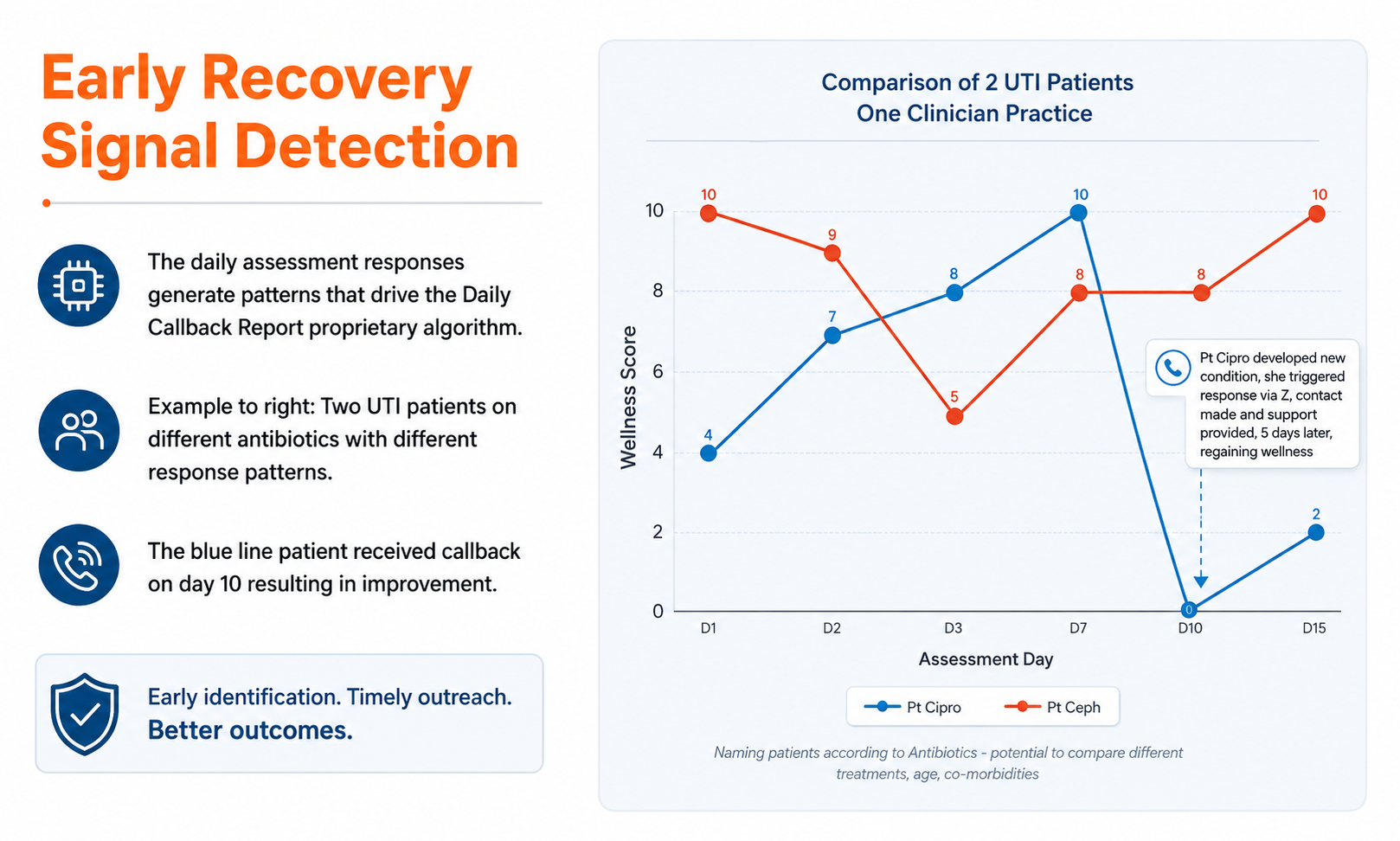
The example compares two patients treated for urinary tract infections by the same clinician but with different antibiotics. Their wellness scores follow markedly different patterns across an assessment period, illustrating the potential to compare recovery associated with different treatments, diagnoses, providers, and eventually patient characteristics or comorbidities.
One patient initially improved but then reported a dramatic decline by Day 10. In the example, that change led to a callback through the Zhealus Patient Support process and subsequent reported improvement. The larger point is that longitudinal patient-reported outcomes can reveal changes and variation that would otherwise remain outside the organization’s view, possibly until too late and the patient re-enters the system.
As these recovery patterns accumulate from thousands of inputs over time, Zhealus moves beyond individual trajectories toward clinical intelligence — identifying patterns in treatment effectiveness and creating new information that can help organizations evaluate and evolve clinical practice.
The example compares two patients treated for urinary tract infections by the same clinician but with different antibiotics. Their wellness scores follow markedly different patterns across an assessment period, illustrating the potential to compare recovery associated with different treatments, diagnoses, providers, and eventually patient characteristics or comorbidities.
One patient initially improved but then reported a dramatic decline by Day 10. In the example, that change led to a callback through the Zhealus Patient Support process and subsequent reported improvement. The larger point is that longitudinal patient-reported outcomes can reveal changes and variation that would otherwise remain outside the organization’s view, possibly until too late and the patient re-enters the system.
As these recovery patterns accumulate from thousands of inputs over time, Zhealus moves beyond individual trajectories toward clinical intelligence — identifying patterns in treatment effectiveness and creating new information that can help organizations evaluate and evolve clinical practice.